
Embossed & debossed folders
Press your design into the stock for depth, texture and a tactile cue of quality.
Embossing raises the design above the surface; debossing presses it in. Both are produced from a custom metal die and can be applied as a standalone finish — blind emboss or deboss — or combined with foil or print.
Embossing vs debossing
Same mechanical process — a custom die pressed into paper. Opposite visual and tactile outcome.
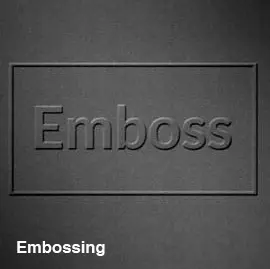
Embossing
Pushes the design up from the surface, creating a raised area you can feel under your fingertips. Suits logos, monograms and feature elements you want to stand proud.
The reverse side will show a faint recess, so it's best avoided directly behind printed text or imagery on the inside of the cover.
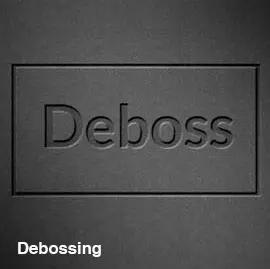
Debossing
Pushes the design down into the stock, leaving a crisp recessed impression. Suits clean, understated branding on dark or textured stocks where ink coverage would muddy the detail.
The reverse side stays flat, so it works well on folders printed both inside and out.
Combining with foil and print
Both techniques layer cleanly with other finishes. Four common combinations:
Foil emboss (combo)
Foil is applied and embossed in a single pass, producing a metallic raised element. The most popular high-end finish for branded logos and feature crests.
Foil deboss
Foil pressed into a recess, framed by the surrounding stock. A subtler take on metallic branding — quieter than a foil emboss without losing the metallic effect.
Blind emboss / deboss
No ink, no foil — the impression alone is the design. Subtle, premium, works particularly well on uncoated and textured stocks where the texture carries the visual.
Print + emboss / deboss
The impression registers over a printed area. Holds tighter tolerances than blind work and needs careful artwork setup, but the printed colour plus tactile relief is striking.
Recommended stocks
Heavier, uncoated and textured stocks take the deepest, cleanest impression. Four picks from our range:
Premium uncoated — smoothest tactile feel under embossed elements.
Standard uncoated — workhorse stock for most embossed jobs.
Kraft — textured, holds blind emboss particularly well.
Recycled — natural texture pairs cleanly with debossed marks.
Coated stocks (gloss, silk) can be embossed but the coating may craze on tight curves and the impression looks softer than on uncoated. Lighter-weight stocks emboss too, but the effect is shallower and the reverse impression more visible — heavier weights are recommended for premium work.
See material guideArtwork requirements
Vector artwork, the emboss area on its own spot-colour layer. We'll proof every job before tooling is cut.
Supply artwork as vector (AI, EPS or PDF). Place the impression area on a separate spot-colour layer named Emboss or Deboss and set to overprint.
Thinner risks losing definition under the press.
Tighter spacing can blur into a single impression.
Keeps the impression clean and away from creasing.
Fine serifs, hairlines and very small type may not hold a clean impression — we'll flag any concerns at proofing and suggest tweaks before the die is cut.
New to print-ready artwork? Our full artwork-supply guide covers bleed, file formats, fonts, colour and the pre-submit checklist.
Read the artwork guideLead times & MOQ
Tooling charges are quoted per design once we've seen your artwork. Everything else is straightforward.
Working days on top of standard production, for the embossing pass.
No MOQ — bespoke runs of any size, small or large.
Die kept indefinitely — repeat runs skip the tooling charge and extra lead time.

Press it into
something premium
Send us your artwork and we'll confirm whether your design will hold a clean impression and recommend the best technique and stock combination before tooling is cut.
Or speak to our team on 023 8087 8030 or email Sales@PrintedFolders.co.uk — happy to talk through technique, stock and tolerances before tooling.